
Need furniture moved safely? Truckify Logistics handles couches, wardrobes and everything awkward with care. Honest pricing, no drama. Get a quote today.
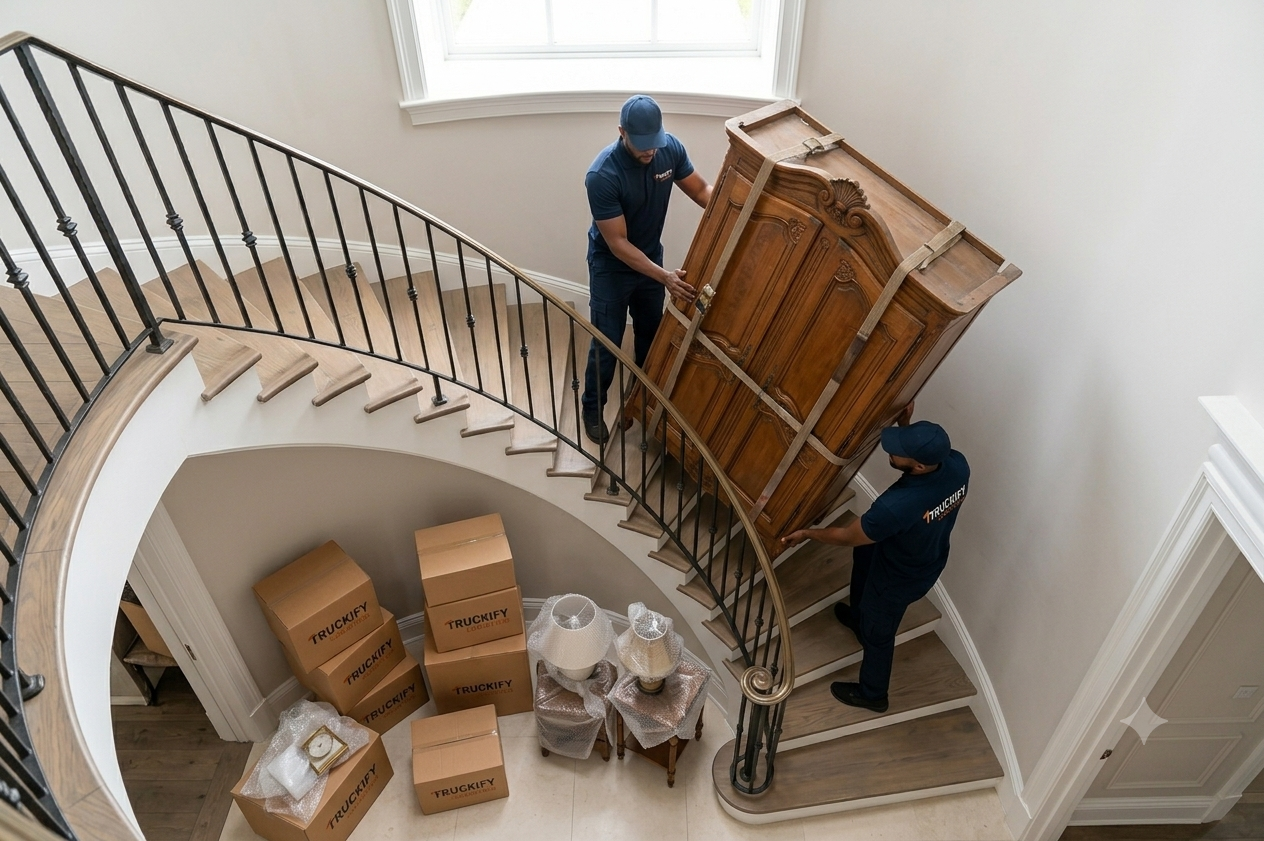
Need furniture moved safely? Truckify Logistics handles couches, wardrobes and everything awkward with care. Honest pricing, no drama. Get a quote today.
Boxes are easy. Anyone can carry a box. It's the furniture that separates a smooth move from a stressful one the couch that won't clear the doorway, the wardrobe that's somehow heavier than it looks, the dining table that seemed fine in the old place and now doesn't fit anywhere in the new one. If you've ever tried to move a bed frame down a stairwell with one other person and a lot of hope, you know exactly what we mean.
At Truckify Logistics, furniture is genuinely where we spend most of our energy on a move. Boxes get loaded fast. Furniture is where the actual skill comes in.
Maybe you've found the perfect couch on Facebook Marketplace, bought a dining table from a local furniture store, or need to move a wardrobe across town. Perhaps you're relocating office furniture, helping a family member, or replacing an old appliance.
Whatever the reason, getting furniture from one place to another takes more than just a vehicle. Large items need to be lifted safely, fragile surfaces need protection, and bulky furniture has to fit through doorways, staircases, and into the right vehicle.
Instead of struggling with trailers, asking friends for help, or risking damage to your furniture, you can have your items collected and delivered safely by people who know how to handle them properly.
In this guide, we'll explain everything you need to know about furniture delivery in South Africa, including how it works, what it costs, how long it takes, what affects the price, how to prepare your furniture, and how to avoid the most common mistakes people make.
Whether you're moving a single chair or furnishing an entire home, this guide will help you make informed decisions and ensure your furniture arrives safely.
Furniture delivery is a specialized transport service designed to move furniture safely from one location to another.
Unlike standard parcel delivery, furniture often requires larger vehicles, careful lifting, protective equipment, and secure loading to prevent damage during transport. Furniture delivery can be arranged for many different situations, including:
Depending on the size of the job, the service may include collection, loading, transport, unloading, and, in some cases, assistance with placing the furniture inside the property. Every delivery is different, which is why experienced furniture transport companies take the time to understand exactly what needs to be moved before recommending the most suitable vehicle and delivery plan.
One of the most common questions people ask is whether a delivery company can transport a specific piece of furniture.
In most cases, the answer is yes.
Professional furniture delivery services are designed to transport everything from a single chair to an entire household's worth of furniture, provided the right vehicle and equipment are used.
Common items include:
Living Room Furniture
Bedroom Furniture
Dining Room Furniture
Office Furniture
Outdoor Furniture
Large Household Items Often Delivered With Furniture
Many customers also include:
These items often travel together during house moves or when collecting purchases from retailers.
Most competitors start by talking about themselves:
"We are a leading furniture delivery company..."
Nobody cares.
Your visitor cares about one thing:
"Can you solve my problem?"
This introduction immediately speaks to the reader's situation, explains what the service is, sets expectations for the guide, and naturally introduces the topics that follow.
If you spend just five minutes gathering the right information before requesting a quote, you'll often save much more time later.
Most delivery delays don't happen on the road.
They happen before the vehicle even starts moving because of missing details, incorrect addresses, or unexpected access issues.
A little preparation goes a long way toward making your same-day delivery smooth, efficient, and stress-free.
Not every delivery needs to happen today.
In fact, choosing a same-day delivery service when you're not in a hurry could mean paying more than necessary. On the other hand, relying on a standard courier when you need something urgently could lead to missed deadlines, frustrated customers, or unnecessary stress.
So how do you know which option is the better choice?
The answer depends on what you're sending, how quickly it needs to arrive, and what level of service you expect.
Let's look at the differences.
What Is a Standard Courier Service?
A standard courier service collects parcels and delivers them according to a scheduled route.
Instead of driving directly from the collection point to your delivery address, your parcel may pass through one or more sorting facilities before reaching its destination.
This system works well for everyday deliveries where speed isn't the highest priority.
It's often used for:
Because courier companies group many deliveries together, they can usually offer lower prices.
The trade-off is that your parcel follows their schedule not yours.
Same-day delivery is designed for situations where time matters.
Instead of waiting for the next available delivery route, your booking is prioritized for collection and delivery on the same day whenever possible.
In many cases, the item travels directly from the collection point to the destination with minimal handling along the way.
This makes same-day delivery ideal for urgent, valuable, or bulky items that require more care or flexibility.
| Feature | Same-Day Delivery | Standard Courier |
|---|---|---|
| Delivery speed | Usually delivered the same day | Usually 1–5 business days |
| Collection | Often collected within hours | Scheduled collection windows |
| Route | Usually direct | Through sorting depots |
| Tracking | Often direct updates from the driver | Tracking through courier systems |
| Best for | Urgent, bulky, valuable or time-sensitive deliveries | Routine parcels and planned deliveries |
| Flexibility | High | Limited to courier schedules |
| Handling | Fewer transfers, less handling | Multiple handling points possible |
| Cost | Higher for speed and dedicated service | Usually lower for non-urgent deliveries |
Neither option is better in every situation.
The right choice depends on your priorities.
Same-day delivery is often the best option when:
In these situations, speed and reliability usually matter more than saving a small amount on delivery costs.
A standard courier is often the smarter option when:
There's no point paying for urgency if tomorrow or next week works just as well.
This is a question many people don't think to ask. A standard courier parcel may be scanned, sorted, loaded, unloaded, and transferred between several facilities before it reaches its destination.
That's an efficient system for handling thousands of parcels every day.
Same-day delivery often involves fewer transfers because the item is usually collected and delivered more directly.
For fragile furniture, large appliances, artwork, or expensive equipment, fewer handling points can reduce the chances of accidental damage.
That doesn't mean one service is always safer than the other it depends on the item, the provider, and how the shipment is handled.
Furniture presents different challenges from a typical parcel.
A sofa, dining table, washing machine, or wardrobe often needs:
Many standard courier networks aren't designed for oversized household furniture.
A dedicated same-day delivery service is often better equipped to transport bulky items safely and efficiently.
Businesses often need both.
A retailer might use:
Using the right service for the right job helps balance speed and cost.
Real-Life Examples
A law firm realizes an important set of signed documents must reach another office before 3:00 PM.
A standard courier may not meet the deadline.
Same-day delivery is the better choice.
A customer orders clothing that isn't needed until next week.
A standard courier is likely the more cost-effective option.
You buy a couch from someone who needs it collected today.
A standard courier probably won't be suitable because of the size, urgency, and handling requirements.
A same-day delivery service is usually the better fit.
One branch runs out of stock during the afternoon.
Waiting until tomorrow could mean lost sales.
Same-day delivery helps keep the shelves stocked and customers happy.
How to Decide
If you're still unsure, ask yourself three simple questions:
Does it need to arrive today?
If yes, same-day delivery is probably the better option.
Is the item large, fragile, or valuable?
If yes, a dedicated delivery service may offer more appropriate handling.
Am I mainly trying to save money?
If the delivery isn't urgent, a standard courier is often the more economical choice.
The right answer isn't always the fastest service, it's the service that best matches your needs.
My experienced thoughts
Both same-day delivery and standard courier services have their place.
Neither is "better" in every situation.
If your priority is affordability and you have time to spare, a standard courier may be all you need.
If your priority is speed, flexibility, careful handling, or transporting larger items, same-day delivery is often the smarter investment.
The key is choosing the service that fits your situation rather than paying for features you don't need or risking delays when timing really matters.
Not every delivery is as simple as moving a sealed cardboard box.
Some items are expensive.
Others are delicate.
Some are simply too large to fit into a standard vehicle.
Whether you're transporting a brand-new television, a solid wood dining table, an antique cabinet, or a commercial photocopier, one thing remains the same how it's handled matters just as much as how quickly it gets there.
A professional delivery service doesn't just move items.
It protects them from the moment they're collected until they're safely delivered.
Fragile doesn't always mean "made of glass.
A fragile item is anything that can easily be damaged if it's dropped, knocked, stacked incorrectly, or transported without proper support.
Common fragile items include:
These items often need extra protection during loading, transport, and unloading.
An oversized item isn't necessarily heavy.
It's simply something that's difficult to transport because of its dimensions.
Examples include:
Large items often require more planning than small parcels because they need enough space inside the vehicle and a safe path through doorways, gates, staircases, and lifts.
High-value items are anything that would be expensive or difficult to replace if damaged.
Examples include:
When transporting valuable items, careful handling and secure transport become far more important than simply getting from point A to point B.
Imagine transporting a refrigerator and a crystal display cabinet.
Both may weigh roughly the same.
One can handle a few bumps.
The other cannot.
That's why experienced delivery companies don't treat every item the same.
Before collection, they consider questions such as:
Planning these details before the vehicle arrives reduces the risk of delays and damage.
Professional deliveries are about much more than simply loading items onto a truck.
Depending on the item, protective measures may include:
Each item should be secured based on its size, weight, and level of fragility. A loose item inside a moving vehicle can shift during braking or cornering, increasing the risk of damage.
Different items require different handling techniques.
For example:
A Television
Should remain upright whenever possible.
The screen should be protected from pressure and impacts.
May need to be secured to prevent unnecessary movement during transport.
Loose hoses and cables should also be protected.
The glass top may need to be transported separately from the frame to reduce the risk of breakage.
May need to be separated into sections before loading to make transport easier and safer.
Printers, servers, and specialist equipment often require careful handling because even a small impact can affect how they operate.
One of the most common delivery problems has nothing to do with transport.
The item simply won't fit through the door.
It happens more often than people realize.
Before booking a delivery, measure:
Five minutes with a tape measure can prevent hours of frustration later.
Sometimes transporting the item is the easy part.
Getting it into the building is the real challenge.
Examples include:
Sharing these details before collection allows the delivery company to plan properly
Many customers avoid mentioning the value of an item because they assume it will increase the price.
In reality, telling the delivery company allows them to prepare appropriately.
The goal isn't to charge more.
The goal is to reduce unnecessary risk.
If an item requires additional protection or specialized handling, it's far better to know that before collection than after something goes wrong.
Over the years, we've seen the same avoidable mistakes happen again and again. Some of the most common include:
Most of these problems can be avoided with a little planning.
Scenario 1: The Facebook Marketplace Sofa
You buy a three-seater couch online.
It looks perfect in the photos.
When the driver arrives, it's actually a large corner unit that won't fit through the seller's front door without being partially dismantled.
Had the dimensions been shared beforehand, the correct team and enough time could have been allocated.
A business needs to relocate an expensive server between offices.
The equipment isn't particularly large, but it's highly sensitive.
The priority isn't speed it's minimizing vibration, impacts, and unnecessary handling.
An old wooden cabinet has been in the family for decades.
Its sentimental value is impossible to replace.
While it may not be the most expensive item being transported, it deserves the same level of care as any high-value delivery.
Before Booking, Ask Yourself These Questions
Before requesting a quote, take a moment to consider:
The answers to these questions help ensure the delivery goes smoothly from start to finish.
Every delivery deserves care, but fragile, oversized, and high-value items deserve extra planning.
The safest deliveries don't happen by accident. They happen because the right questions were asked before the vehicle arrived, the correct equipment was used, and the item was handled with care every step of the way.
Whether you're transporting a family heirloom, a large appliance, office equipment, or a newly purchased sofa, good preparation is the best protection.
One of the biggest misconceptions about same-day delivery is that once a driver collects your item, it's simply a matter of driving from one address to another.
In reality, South African deliveries come with unique challenges that many people don't think about until they experience them firsthand.
Traffic, security procedures, apartment buildings, gated estates, and even loading restrictions can all affect how quickly a delivery is completed.
A professional delivery company plans for these challenges instead of being surprised by them.
Understanding these realities helps you set realistic expectations and avoid unnecessary delays.
Most people assume delivery times are based on distance. In many cases, they're based on time.
Driving 20 kilometers at 11:00 AM can take half the time it would during the morning or afternoon rush.
Cities such as Johannesburg, Pretoria, Cape Town, Durban, and Gqeberha all have peak traffic periods where major routes become significantly slower.
Even a relatively short delivery can be delayed by:
This is why experienced delivery companies plan routes based on expected travel time not just kilometers.
South Africa has thousands of secure residential estates.
While they provide excellent security for residents, they can also increase delivery times.
Many estates require:
If these arrangements haven't been made before the driver arrives, a five-minute stop can quickly become a twenty-minute wait.
One simple phone call to the recipient before the delivery often prevents unnecessary delays.
Apartment deliveries are rarely as simple as parking outside and carrying an item through the front door.
Drivers may need to deal with:
Some apartment buildings even require residents to reserve the service lift before large furniture can be moved.
If this isn't arranged beforehand, the delivery may need to be postponed.
Commercial buildings often have strict delivery procedures.
Some only allow deliveries during certain hours.
Others require:
For businesses, planning ahead is just as important as choosing the right delivery company.
Delivering to a shopping Center isn't always straightforward.
Many shopping centers require deliveries to take place through dedicated loading areas rather than public entrances.
Some retailers can only receive stock during specific delivery windows.
Missing that time slot may mean waiting until the following day.
Businesses that rely on stock replenishment know that timing is everything.
Not every same-day delivery happens in a major city.
Deliveries to smaller towns or rural areas may involve:
This doesn't mean same-day delivery isn't possible, but it does mean additional planning may be needed.
Regional Coverage Matters
Many customers assume every delivery company operates nationwide.
That's not always the case.
Some companies only serve one city.
Before booking, it's worth confirming whether your collection and delivery locations fall within the company's service area.
This helps avoid disappointment and ensures accurate delivery estimates.
Weather isn't always the first thing people think about, but it can have a real impact on deliveries.
Heavy rain can slow traffic, reduce visibility, and make loading and unloading more challenging
.Strong winds may require extra care when transporting lightweight or oversized items, while storms can affect road conditions in some areas.
Although experienced drivers adapt to changing conditions, safety should always come before speed.
One thing we've learned is that most delivery problems can be solved with good communication.
If a driver knows about:
before leaving for the collection, they can plan accordingly.
Unexpected surprises are what cause delays not preparation.
Scenario 1. The Estate That Needed Approval
A customer booked a same-day delivery to a secure estate and assumed the driver would simply be allowed in.
When the driver arrived, security required the resident to approve the visitor through the estate's access system.
Unfortunately, the resident was in a meeting and didn't answer the phone for nearly 30 minutes.
The delay had nothing to do with traffic or the delivery company, it was simply a matter of access.
A quick approval before the driver arrived would have prevented the wait.
Scenario 2. The Apartment Lift
A family purchased a large double-door refrigerator.
The driver arrived on time, but the building manager explained that the service lift hadn't been booked.
Without access to the lift, the refrigerator couldn't be moved safely to the apartment. The delivery had to be rescheduled.
Five minutes of planning the day before would have saved an entire day.
Scenario 3. The Business Delivery
An office ordered replacement desks for a workspace renovation.
The driver reached the building early, but deliveries were only permitted between 9:00 AM and 11:00 AM through the designated loading bay.
Because the building's delivery policy hadn't been checked beforehand, the team had to wait until the approved delivery window.
The lesson wasn't about speed it was about knowing the building's requirements before setting off.
You don't have to control the traffic to help your delivery arrive on time.
You can make a big difference by:
A few minutes of preparation can save everyone a great deal of time.
South Africa is a diverse country, and every delivery is different.
A same-day delivery to a suburban home may take an hour or two.
A delivery to a secure estate, a busy office tower, or a fourth-floor apartment may require extra planning even if the distance is exactly the same.
The best delivery companies don't just know the roads.
They understand the realities of delivering throughout South Africa and plan each job accordingly.
That experience helps turn potential delays into smooth, successful deliveries.
Every delivery is different.
Some go exactly as planned.
Others remind us why preparation matters.
Over the years, we've seen situations that could have been stressful become simple because someone asked the right questions beforehand. We've also seen small oversights turn into unnecessary delays.
Here are a few examples of situations that happen more often than people realize.
Story 1
"It's Just a Couch..."
A customer contacted us after buying what was advertised as a "three-seater couch." It sounded straightforward.
When the team arrived, they discovered it was actually a large L-shaped corner unit. It wouldn't fit through the seller's front door without partially dismantling it.
The delivery still happened, but it took much longer than expected because the information we received didn't match the item waiting for us.
The Lesson
Whenever possible, send photos and approximate measurements.
Pictures remove guesswork and help ensure the correct vehicle and team arrive the first time.
Story 2
The Apartment Lift That Was Never Booked
A family had purchased a brand-new refrigerator.
Everything was ready.
The driver arrived on time.
The item was loaded safely.
The journey went smoothly.
Then the unexpected happened.
The apartment building required residents to reserve the service lift before moving large appliances.
Without lift access, the refrigerator couldn't be moved safely.
The delivery had to wait until building management approved access.
If you're moving into an apartment, check with the building manager before booking your delivery.
Five minutes on the phone can save hours on delivery day.
Story 3
"Someone Will Be Home..."
A washing machine was scheduled for delivery during the afternoon.
The driver arrived exactly as planned.
Unfortunately...
Nobody answered the phone.
Nobody answered the gate.
After waiting, the driver had to leave to complete other scheduled deliveries.
The customer later explained they thought another family member would be home.
They weren't.
The Lesson
Always make sure the recipient knows roughly when to expect the delivery.
One missed phone call can delay the entire schedule.
Story 4
The Wrong Address
This one happens more often than you'd expect.
The customer copied the delivery address from WhatsApp.
Unfortunately, one digit in the street number was incorrect.
The driver arrived.
The homeowner had no idea why a truck had stopped outside.
After several phone calls, the correct address was confirmed.
The actual destination was three streets away.
The Lesson
Always double-check your addresses before confirming a booking.
A tiny mistake can cause unnecessary delays.
Story 5
The "Lightweight" Dining Table
A customer described the item as:
"Just a dining table."
When the team arrived, it turned out to be a solid hardwood table with a thick marble top.
It wasn't impossible to move.
It simply required more people and different equipment than originally planned.
Fortunately, the situation was resolved.
Had we known beforehand, the correct resources could have been assigned immediately.
The Lesson
When describing an item, mention what it's made from not just what it is. A wooden table, a glass table, and a marble table all require different handling.
Story 6
The Estate Security Delay
A delivery to a secure estate looked simple on paper.
The distance was short.
Traffic was light.
The driver arrived early.
The only problem?
Security required visitor approval from the homeowner.
The homeowner's phone was on silent during a meeting.
The driver waited outside for almost half an hour before access was granted.
The Lesson
If you're expecting a delivery to a secure estate, let security know in advance and keep your phone nearby around the estimated arrival time.
Story 7
"It Won't Fit Through the Door"
A customer bought a beautiful wardrobe from Facebook Marketplace.
Collection went perfectly.
Transport went perfectly.
Arrival...
Not so much.
The wardrobe was wider than the bedroom doorway.
No one had measured either the furniture or the doorway before delivery.
The wardrobe eventually made it inside after being partially dismantled, but it added unnecessary time and effort.
The Lesson
Always measure both the furniture and the space it needs to pass through not just the room where it will end up.
Story 8
The Office That Forgot About Friday
A business booked office furniture for Friday afternoon.
The delivery team arrived on schedule.
The office was closed early for a company function.
No one had mentioned it.
The furniture stayed on the truck until another delivery date could be arranged.
The Lesson
Business deliveries should always be coordinated with the person responsible for receiving them.
Never assume someone will be available.
Every one of these situations could have become a frustrating experience.
Instead, each one teaches the same lesson:
Good deliveries start long before the truck begins moving.
Accurate information.
Good communication.
A little preparation.
These simple things make the biggest difference.
Our Advice
If you're unsure about anything... Ask.
If you think an item might be too large... Measure it.
If you think access could be difficult... Tell us.
If you aren't certain which vehicle is needed... Send photos.
The more information shared before the delivery, the smoother everything usually goes.
Every delivery teaches something.
Some lessons come from experience.
Others come from unexpected situations that remind us why planning matters.
Whether you're moving a single chair across town or delivering furniture to a secure estate, success usually depends on the small details that people rarely think about until the day arrives.
That's why experienced delivery companies ask so many questions not to make the booking more complicated, but to make the delivery simpler.
One of the first questions people ask before booking a furniture delivery is:
"How much is it going to cost?"
It's a reasonable question, but there's no honest delivery company that can give you one fixed price without knowing a few important details first.
Delivering a bedside table across town isn't the same as transporting a solid wood dining table, a king-size bed, or an entire lounge suite to another city.
Every furniture delivery is different, and that's why prices can vary.
The good news is that once you understand what affects the cost, it becomes much easier to compare quotes and choose the right delivery service.
The size of your furniture is one of the biggest factors affecting the price.
Small items are quicker to load, easier to carry, and require less space inside the vehicle.
Larger items take longer to handle and often require a bigger truck.
For example:
The more space your furniture occupies, the higher the transport cost is likely to be
Two tables may look similar.
One could weigh 20 kilograms.
The other could weigh well over 100 kilograms because it's made from solid hardwood or has a marble top.
Heavy furniture often requires:
Always tell the delivery company what the furniture is made from not just what it is.
Distance affects:
A short delivery within the same suburb will generally cost less than transporting furniture between cities or provinces.
However, distance isn't everything.
A 10-kilometre delivery to a fourth-floor apartment may take longer than a 40-kilometre delivery to a house with easy access.
That's why professional delivery companies consider both distance and the time needed to complete the job.
Many people ask for a quote by saying:
"I need some furniture moved."
That could mean:
The number of items affects:
The more accurate your item list is, the more accurate your quote will be.
Using the right vehicle isn't just about making everything fit.
It's also about protecting your furniture during transport.
Here's a general guide:
| Furniture Item | Typical Vehicle |
|---|---|
| Chair or bedside table | Small delivery vehicle |
| Washing machine or fridge | Panel van or 1-ton truck |
| Sofa or mattress | 1-ton truck |
| Dining room furniture | Larger truck |
| Full household furniture | Moving truck |
Choosing the correct vehicle helps prevent damage and avoids unnecessary extra trips.
This is one of the most common details customers forget to mention.
Furniture deliveries become more complicated when they involve:
These situations often require more time, more effort, and sometimes additional people. Mentioning them upfront helps the delivery company plan properly and provide a more accurate quote.
Some furniture needs more than careful lifting.
Items such as:
may require:
The goal isn't simply to transport the furniture it's to deliver it in the same condition it was collected.
If your furniture needs to be collected and delivered today, the price may be higher than a scheduled delivery.
Urgent jobs often require:
You're paying for flexibility and speed.
Large furniture doesn't always fit through doors or staircases.
Common examples include:
If dismantling and reassembly are required, the delivery may take longer and require additional labour.
Let the delivery company know in advance if you think this might be necessary.
Where the furniture is collected can influence the price just as much as where it's being delivered.
For example:
The smoother the collection and delivery process, the easier it is to keep costs under control.
While every delivery is different, these examples provide a general idea of typical price ranges.
| Furniture Item | Typical Price Range |
|---|---|
| Single chair | R300 – R600 |
| Coffee table | R350 – R700 |
| Washing machine | R500 – R900 |
| Three-seater couch | R700 – R1,500 |
| King-size bed | R800 – R1,600 |
| Bedroom suite | R1,200 – R2,500 |
| Dining room suite | R1,200 – R2,800 |
| Office furniture From | R1,500+ |
| Full household move | Quote required |
These examples are intended as a guide only. Actual pricing depends on factors such as distance, vehicle size, labor, access conditions, urgency, and any special handling requirements.
You don't always have to choose the cheapest quote to get good value.
Here are a few ways to keep your delivery costs under control:
A little preparation can reduce delays, avoid unexpected costs, and help the delivery company plan more efficiently.
You might wonder why many delivery companies don't advertise a fixed price for furniture delivery.
The simple reason is that no two deliveries are the same.
A couch travelling 10 kilometers between two houses is very different from a marble dining table being moved into a fourth-floor apartment with no lift.
Advertising a low fixed price might look appealing, but it can also lead to hidden costs or disappointment when the actual job is more complex.
A personalized quote based on the details of your delivery is usually the fairest approach for both you and the delivery company.
Furniture delivery isn't priced according to one simple rate.
It's based on the time, equipment, vehicle, labor, and planning needed to move your furniture safely.
Understanding what affects the cost helps you compare quotes more confidently and avoid surprises on delivery day.
The cheapest option isn't always the best value. A professional service that uses the right vehicle, protects your furniture properly, and communicates clearly can save you far more than the difference in price.
One of the most common questions we hear is:
"How long will it take to deliver my furniture?"
The honest answer is that it depends on the type of furniture, the distance between collection and delivery, and a few practical factors such as traffic, access to the property, and the time you make your booking.
Delivering a bedside table across town is very different from transporting a king-size bed to a fourth-floor apartment or moving an entire dining room suite to another city.
The good news is that most furniture deliveries follow predictable timelines, making it easier to plan your day and know what to expect.
Several factors influence how quickly your furniture can be collected and delivered.
These include:
The more information you provide when requesting a quote, the easier it is to estimate a realistic delivery time.
Scenario 1: Delivering One Small Furniture Item
If you're transporting something like:
the delivery is usually straightforward.
These items are quick to load, don't require a large vehicle, and are generally easier to handle.
Typical delivery time
Around 2 – 4 hours, depending on traffic, driver availability, and collection times.
Scenario 2: Delivering a Couch or Bed
Large furniture takes more time than smaller items.
For example, a couch or bed may need to be carried by two people, carefully loaded, secured inside the vehicle, and positioned correctly at the destination.
If stairs or narrow entrances are involved, the delivery can take longer.
Typical delivery time
Around 3 – 6 hours for most local deliveries.
Buying furniture from Facebook Marketplace is becoming increasingly popular.
These deliveries usually involve:
Because collection depends on the seller's availability, the timeline can vary.
Typical delivery time
Most collections can be completed on the same day if booked early enough.
Retail furniture stores often have dedicated collection areas and loading staff, making the collection process quicker.
However, delays can still happen if:
Typical delivery time
Usually 2 – 5 hours once the furniture is ready for collection.
Moving a complete bedroom or lounge suite naturally takes longer than transporting one item.
The team needs time to:
Typical delivery time
Half a day for most local deliveries.
A complete household move is a very different type of job.
Instead of delivering one or two items, the team may be transporting:
These moves require careful planning and are usually booked in advance.
Typical delivery time
Most local house moves take between half a day and a full day, depending on the size of the property and access conditions.
Delivering furniture between cities requires additional planning.
For example:
The total delivery time depends on the distance, road conditions, and scheduling. Some nearby city-to-city deliveries may still be completed on the same day, while longer routes may require more time.
The time you request your delivery has a significant impact on how quickly it can be completed.
A booking made at 8:00 AM has a much better chance of being collected and delivered the same day than one made at 4:30 PM.
If your furniture needs to arrive urgently, booking early gives the delivery company more flexibility to plan the route and allocate the right vehicle.
Many people assume that longer distances always mean longer delivery times. In reality, access often has a greater impact.
For example:
A delivery covering 15 kilometers to a fourth-floor apartment with no lift may take longer than a 40-kilometre journey between two houses with easy driveway access.
Time spent carrying furniture, waiting for lift access, or completing security procedures often exceeds the actual driving time.
Even the best-planned deliveries can encounter unexpected situations.
Examples include:
A professional delivery company will keep you informed if delays occur and provide updated arrival estimates whenever possible.
Good communication is just as important as punctuality.
There are several simple things you can do to help your delivery run smoothly.
Before the driver arrives:
These small steps can prevent unnecessary delays and help keep your delivery on schedule.
| Delivery Type | Estimated Time |
|---|---|
| Single chair or bedside table | 2 – 4 hours |
| Coffee table | 2 – 4 hours |
| Sofa or couch | 3 – 6 hours |
| Bed or mattress | 3 – 6 hours |
| Bedroom suite | Half a day |
| Lounge suite | Half a day |
| Full household move | Half a day to a full day |
| Furniture between nearby cities | Often same day if booked early |
These are general estimates only. Actual delivery times depend on traffic, distance, access conditions, vehicle availability, and the specific details of your booking.
Expert Tip
If your furniture must arrive before a certain time for example, before a tenant moves in, before a business opens, or before a retailer closes tell the delivery company when requesting your quote.
A clear deadline allows them to recommend the most suitable service, plan the route more effectively, and avoid unrealistic expectations.
Final Thoughts
Furniture delivery isn't just about driving from one address to another.
It's about collecting, protecting, transporting, and delivering your furniture safely and efficiently.
While every delivery is different, understanding the factors that influence delivery times helps you plan ahead and avoid unnecessary surprises.
The more information you provide before the job begins, the smoother the delivery is likely to be.
A successful furniture delivery doesn't start when the truck arrives. It starts with a little preparation beforehand.
Spending just a few minutes getting your furniture ready can make the collection quicker, reduce the risk of damage, and help avoid unnecessary delays.
Whether you're moving a single chair, collecting a Facebook Marketplace purchase, or relocating an entire household, these simple steps will help your delivery go as smoothly as possible.
Before the driver arrives, make sure you have a clear list of every item that needs to be transported.
This helps prevent confusion and ensures nothing is accidentally left behind.
For example:
If you've booked the delivery for one item but later decide to include several more, let the delivery company know beforehand.
The right vehicle and enough space need to be available.
One of the biggest mistakes people make is assuming everything will fit through the door.
Take a few minutes to measure:
This is especially important for:
Knowing the measurements helps determine the right vehicle and highlights any potential access problems before moving day.
It's not just the furniture that needs measuring.
Check the spaces the furniture has to pass through.
Measure:
Many delays happen because a wardrobe fits perfectly inside a room but won't fit through the bedroom door.
Furniture should be as light as possible before moving.
Remove:
Not only does this make lifting safer, but it also reduces the risk of items shifting or breaking during transport.
Loose parts can easily get lost during loading and unloading.
Remove or secure:
Place screws, bolts, and brackets in a labelled plastic bag and tape it securely to the furniture so they're easy to find later.
Not every piece of furniture needs wrapping, but delicate items certainly do.
Consider protecting:
Using moving blankets, bubble wrap, or protective covers helps prevent scratches and chips during transport.
This is one of the simplest yet most overlooked steps.
Before the furniture is loaded, take clear photos from different angles.
These photos:
It only takes a minute but can be very useful if questions arise later.
Think about where the furniture is being collected and where it's being delivered.
Ask yourself:
Providing this information beforehand allows the delivery team to prepare properly.
If someone else is receiving the furniture, make sure they know:
Many delays happen simply because the recipient wasn't expecting the delivery.
No two deliveries are the same.
If there's something unusual about your furniture or property, mention it before collection.
Examples include:
The more information shared upfront, the easier it is to plan a safe and efficient delivery.
Use this checklist to make sure you're ready:
Even experienced movers can run into problems when small details are overlooked.
Try to avoid these common mistakes:
A little planning can prevent hours of frustration.
Expert Tip
If you're unsure whether a piece of furniture needs special handling, send a few clear photos when requesting your quote.
Pictures help the delivery company recommend the right vehicle, estimate the labour required, and identify any potential challenges before collection day.
It also reduces the chance of unexpected delays or misunderstandings.
Expert's Thoughts
Preparing your furniture before collection isn't about making the driver's job easier it's about protecting your furniture, saving time, and ensuring the delivery goes smoothly from start to finish.
The more organized you are before the truck arrives, the less likely you are to encounter delays, damage, or unexpected complications.
A few minutes of preparation today can save hours of stress on delivery day.
Many people use the terms furniture delivery and furniture removal as if they mean the same thing.
While they're closely related, they're designed for different situations.
Knowing the difference can help you choose the right service, avoid unnecessary costs, and make sure your furniture is moved as efficiently as possible.
Let's look at how they compare.
Furniture delivery usually involves transporting one or a few furniture items from one location to another.
Typical examples include:
The focus is on transporting specific items safely and efficiently.
Most furniture deliveries can often be completed within a few hours, depending on the distance and access requirements.
Furniture delivery is ideal when you don't need to move an entire household.
Furniture removal is designed for larger moves.
Instead of transporting one or two items, it usually involves moving most or all of the furniture from a home, apartment, or office.
This may include:
Furniture removals often require:
If you're relocating your home or business, a furniture removal service is usually the better option.
The easiest way to think about it is this:
Furniture Delivery = Moving individual furniture items.
Furniture Removal = Moving most or all of the contents of a property.
While both involve transporting furniture, the scale of the job is completely different.
Here are a few common situations.
| Your Situation | Best Option |
|---|---|
| Bought a couch from Facebook Marketplace | Furniture Delivery |
| Purchased a dining table from a retailer | Furniture Delivery |
| Sending a fridge to a family member | Furniture Delivery |
| Moving into a new apartment | Furniture Removal |
| Relocating a three-bedroom house | Furniture Removal |
| Moving office furniture to a new building | Furniture Removal |
| Delivering one wardrobe | Furniture Delivery |
| Collecting a washing machine | Furniture Delivery |
Choosing the right service helps ensure you're paying for exactly what you need nothing more, nothing less.
Absolutely.
Many customers move furniture and appliances together.
For example:
As long as the delivery company knows what needs to be transported, they can recommend the appropriate vehicle and equipment.
Yes.
In fact, one-item deliveries are among the most common requests. Customers regularly book deliveries for:
There's no need to hire a large removal truck if you're only transporting one or two items.
Sometimes customers request furniture delivery when they actually need a removal service.
For example:
You're moving from one three-bedroom house to another.
Although it's technically "furniture delivery," you're transporting an entire household.
A removal service offers:
It often proves more efficient and cost-effective than arranging several separate furniture deliveries.
Furniture delivery is generally more affordable because:
Furniture removals usually cost more because they involve:
The price reflects the size and complexity of the move rather than simply the distance travelled.
Furniture delivery is often completed within a few hours.
Furniture removals usually take half a day or a full day, depending on:
Planning ahead becomes much more important for larger removals.
If you're only moving one or a handful of furniture items, furniture delivery is usually the best choice.
If you're relocating an entire property, a furniture removal service is likely to save you time, effort, and money.
If you're unsure which option suits your situation, simply explain what needs to be moved.
An experienced delivery company can recommend the most appropriate service based on the size of your move rather than selling you something you don't need.
| Furniture Delivery | Furniture Removal |
|---|---|
| One or a few items | Most or all household furniture |
| Smaller vehicle | Larger moving truck |
| Usually completed in hours | Usually takes half a day or more |
| Lower labour requirements | More people required |
| Ideal for Marketplace purchases | Ideal for house or office relocations |
Not all furniture can be moved the same way.
A plastic outdoor chair and a solid oak dining table require completely different handling. The same applies to a glass coffee table, a marble countertop, or an antique cabinet that's been in the family for generations.
Fragile, valuable, and oversized furniture needs extra planning—not because it's impossible to move, but because protecting it properly requires the right equipment, careful handling, and attention to detail.
The goal isn't simply to get it from one place to another.
The goal is for it to arrive in the same condition it left.
Fragile furniture includes any item that can easily crack, chip, scratch, or break if handled incorrectly.
Common examples include:
These items often require:
Glass and stone don't usually survive sudden impacts, which is why careful loading is just as important as careful driving.
Some furniture isn't fragile because of the material.
It's valuable because of what it costs or what it means to the owner.
Examples include:
These items deserve extra care because replacing them may be impossible.
Before collection, it's a good idea to:
Good communication helps everyone understand what's most important.
Large furniture often presents a different challenge.
It may not be fragile, but it can be difficult to move safely.
Common oversized items include:
Moving oversized furniture isn't just about lifting.
It's about planning the route from the room to the truck.
That includes checking:
Sometimes the biggest challenge isn't the transport, it's getting the furniture out of the building.
Some furniture simply won't fit through standard doors or staircases.
Examples include:
Where possible, dismantling these items before collection can make the move quicker and reduce the risk of accidental damage.
If you're unsure whether dismantling will be necessary, mention it when requesting your quote.
Different materials require different handling techniques.
Glass
Glass scratches easily and can shatter if placed under pressure.
It should always be protected and transported upright where appropriate.
Marble is extremely heavy and can crack if lifted unevenly.
These items often require additional people and specialized lifting techniques.
Hardwood furniture is durable but can still be scratched, dented, or damaged if it isn't protected during transport.
Moving blankets help prevent surface damage.
Leather furniture should be protected from sharp objects, dirt, and unnecessary friction during loading and unloading.
Sofas and upholstered chairs should be kept clean and protected from dust, moisture, and rough surfaces while being transported.
You can help protect your furniture by taking a few simple steps before the driver arrives.
We recommend that you:
The more information you provide beforehand, the easier it is to plan the safest way to transport your furniture.
Many furniture-related accidents happen before the truck even starts moving.
Some of the most common mistakes include:
A little planning often prevents expensive mistakes.
One delivery involved a beautiful solid oak wardrobe that looked like it would fit through the bedroom door without any problems.
Once the team tried to move it, they realized the doorway was just a few centimeters too narrow.
Rather than forcing it through and risking damage, the wardrobe had to be partially dismantled before it could be removed safely.
The delay wasn't caused by the delivery itself.
It happened because no one had measured the doorway beforehand.
A few quick measurements the day before would have saved valuable time and avoided unnecessary frustration.
If you're moving expensive, oversized, or delicate furniture, send several clear photos when requesting a quote.
Pictures help the delivery company assess:
A few photos often answer questions that are difficult to explain over the phone.
Every piece of furniture deserves careful handling, but fragile, valuable, and oversized items require a little more planning.
The right preparation, clear communication, and suitable equipment help reduce the risk of damage and ensure your furniture arrives safely.
Whether you're transporting a family heirloom, a marble dining table, or a corner couch, taking the time to plan ahead can make all the difference.
Facebook Marketplace has become one of the most popular places to buy and sell second-hand furniture in South Africa.
From nearly new couches and dining tables to wardrobes, office desks, and appliances, it's often possible to find quality furniture at a fraction of the price you'd pay in a store.
The challenge isn't usually buying the furniture.
It's getting it home.
Many buyers only realize after making payment that the item won't fit inside their car, they don't have a trailer, or the seller needs it collected that same day.
That's where a professional furniture delivery service can save you time, stress, and multiple trips.
Unlike buying from a furniture retailer, Facebook Marketplace purchases are made between private individuals.
That means every collection is different.
Some sellers live in apartments.
Others live in secure estates.
Some help load the furniture.
Others expect the buyer to handle everything.
There are no standard procedures, so good communication becomes essential.
Before committing to a purchase, ask the seller a few simple questions.
You'll save yourself a lot of frustration later.
These questions help you avoid surprises on collection day.
One of the biggest mistakes buyers make is purchasing furniture before checking whether it will fit.
Measure:
There's nothing more frustrating than buying the perfect wardrobe only to discover it won't fit through the bedroom door.
Many Marketplace purchases look smaller in photos than they really are.
For example:
If you're unsure, ask the delivery company before collection.
A quick photo can usually help determine the right vehicle.
If possible, organize the delivery before making payment.
This helps ensure:
Nothing is more frustrating than paying for furniture only to discover the seller needs it collected immediately.
Facebook Marketplace is an excellent platform, but it also attracts scammers.
Never rush into payment because someone says:
"There are five other buyers."
Whenever possible:
If something feels suspicious, trust your instincts.
Collection Day Checklist
Before the driver arrives, make sure:
A little preparation makes the collection much quicker.
If you're the seller, there are a few things you can do to help the process.
These simple steps help the collection go smoothly and create a better experience for everyone involved.
Furniture bought online often includes:
Whether you're buying one item or furnishing an entire home, professional transport helps ensure your purchase arrives safely.
A customer found what looked like the perfect leather couch on Facebook Marketplace.
The photos looked excellent, the price was fair, and the seller wanted it collected that afternoon.
Before arranging transport, the buyer asked for one extra photo showing the back of the
couch.
It revealed a long tear in the leather that wasn't visible in the original pictures.
That one question saved the buyer from purchasing furniture that wasn't in the condition they expected.
The lesson?
Never rely on one or two photos.
Ask for more.
A few extra images can prevent an expensive mistake.
When requesting a furniture delivery quote for a Marketplace purchase, send the delivery company:
This allows the right vehicle and team to be arranged before collection day.
Facebook Marketplace is one of the best places to find affordable furniture in South Africa, but buying the furniture is only half the journey.
Planning the collection properly helps avoid delays, unexpected costs, and unnecessary stress.
Whether you've bought a single bedside table or an entire lounge suite, taking a few minutes to ask the right questions and organize transport can make the experience far smoother.
Delivering furniture isn't always as simple as driving to an address and unloading the truck.
In South Africa, many homes and businesses are located in secure estates, apartment complexes, office parks, and gated communities that have their own access rules and restrictions.
A delivery that would normally take 30 minutes can quickly become a two-hour job if nobody has planned for these challenges.
The good news is that most delays can be avoided with a little preparation.
Apartments are one of the most common places where furniture deliveries become more complicated.
Unlike a freestanding house, drivers often have to deal with limited parking, shared entrances, lifts, and narrow hallways.
Before booking your delivery, ask yourself:
Knowing the answers before collection day helps avoid unnecessary delays.
Many apartment buildings don't allow large furniture to be moved in passenger lifts. Instead, residents are required to book a service lift.
Some buildings require bookings:
If the lift hasn't been reserved, the delivery may need to be delayed until access is available.
Always check your building's moving policy before confirming your delivery date.
Not every apartment has a lift.
Moving furniture up several flights of stairs takes:
Large items such as:
can become much more challenging in stair-only buildings.
Mention this when requesting your quote so the correct team can be allocated.
South Africa has thousands of secure residential estates.
While these communities provide excellent security, they also introduce extra steps for delivery drivers.
Common requirements include:
If security cannot contact the resident, the driver may have to wait outside until access is granted.
A simple visitor approval before arrival can save a lot of time.
Townhouse complexes often combine the challenges of apartments and standalone homes.
Drivers may need to deal with:
Providing clear directions to the unit can help avoid unnecessary delays.
Many commercial buildings have strict procedures for deliveries.
These can include:
If you're moving desks, filing cabinets, boardroom tables, or office chairs, it's worth checking these requirements in advance.
Businesses inside shopping centres usually receive deliveries through dedicated loading bays rather than customer entrances.
Some centres only allow deliveries:
Missing these time slots may result in delays or the need to reschedule.
Furniture deliveries to retirement villages often require extra care and patience.
Access may involve:
If you're arranging a delivery for a family member, it's worth confirming these details beforehand.
Many delivery delays happen because of simple oversights.
Examples include:
Most of these issues are easy to prevent with good communication.
Before the driver arrives, check the following:
A few minutes of preparation can save hours on delivery day.
One customer ordered a beautiful six-seater dining table for their new apartment.
Everything went according to plan until the driver reached the building.
The passenger lift was too small.
The service lift hadn't been booked.
The table couldn't safely be carried up eight flights of stairs.
The delivery had to be postponed until the building manager could arrange lift access.
The furniture wasn't the problem.
The planning was.
Now, whenever someone books an apartment delivery, one of the first questions we ask is:
"Has the service lift been booked?"
That one question has prevented countless delays.
If you're moving into an apartment, estate, or office building for the first time, ask the property manager for a copy of the building's moving policy.
Many buildings have rules covering:
Knowing these requirements before booking helps ensure a much smoother delivery.
Apartments, secure estates, and office buildings present unique challenges, but they don't have to make your delivery stressful.
The key is preparation.
By understanding your building's access requirements and sharing that information with your delivery company in advance, you reduce the chances of delays and help ensure your furniture arrives safely and on time.
Every furniture delivery tells a story.
Some are straightforward.
Others remind us that the smallest detail can make the biggest difference. Over time, we've learned that successful deliveries don't happen by luck. They happen because someone planned ahead, asked the right questions, and paid attention to the details.
Here are a few real-world situations that show why preparation matters.
A customer bought a beautiful L-shaped couch from Facebook Marketplace.
The photos looked normal.
The seller described it as "a standard corner couch."
When the driver arrived, it turned out to be much larger than expected. The couch filled almost the entire loading space in the vehicle that had been booked.
Fortunately, the delivery could still be completed, but it required rearranging the load and took longer than planned.
What We Learned
Never rely on descriptions alone.
A few clear photos and basic measurements help ensure the correct vehicle is sent the first time.
Everything was packed.
The truck arrived on time.
The customer was ready.
The wardrobe wasn't.
It had been assembled inside the bedroom years earlier, and no one realized it was too large to fit through the door.
Rather than forcing it through and risking damage, the wardrobe had to be carefully dismantled before it could be moved.
Always measure large furniture against the doorways and hallways it needs to pass through not just the room where it sits.
A customer requested transport for "a dining table."
Simple enough.
When the team arrived, they discovered the tabletop was solid marble.
It was far heavier than expected and required additional lifting assistance to move safely.
The delivery was completed successfully, but it reinforced an important lesson.
What We Learned
Tell the delivery company what the furniture is made from.
A wooden table and a marble table may look similar, but they require completely different handling.
A family had purchased a sofa from a seller inside a secure estate.
The collection address was correct.
The driver arrived on time.
The problem?
Security couldn't reach the seller to approve visitor access.
The truck waited outside the gate for almost half an hour before entry was granted.
What We Learned
If a collection or delivery is taking place inside a secure estate, make sure visitor access has been arranged before the driver arrives.
A quick phone call beforehand can prevent unnecessary delays.
A couple bought a king-size bed for their new apartment.
Collection went perfectly.
Transport went perfectly.
The problem only appeared when the truck reached the destination.
The building required residents to reserve the service lift for large deliveries.
No booking had been made.
Without access to the lift, the bed couldn't be moved safely to the apartment.
The delivery had to be rescheduled.
What We Learned
If your apartment building has a service lift, book it before delivery day.
It's one of the simplest ways to avoid delays.
A customer arranged for a wardrobe to be collected from Facebook Marketplace.
The driver arrived at the agreed time.
No one answered the door.
After several phone calls, the seller apologized, they had completely forgotten about the collection and were still at work.
The delivery had to be postponed until later that day.
What We Learned
Confirm the collection with the seller a few hours before the driver leaves.
A quick message can save everyone time.
Everything about the booking looked correct.
The furniture was loaded.
The delivery route was planned.
When the driver arrived, the homeowner looked confused.
They weren't expecting a delivery.
The customer had accidentally entered the wrong street number when making the booking.
The correct address was only a few streets away, but it still caused unnecessary delays.
What We Learned
Always double-check the collection and delivery addresses before confirming your booking.
Even a single incorrect digit can send the driver to the wrong property.
Not every valuable item has a high price tag.
One customer asked us to transport an old wooden rocking chair that had belonged to their grandmother.
Financially, it wasn't the most expensive piece of furniture we'd ever moved.
Emotionally, it was priceless.
The customer wasn't worried about how quickly it would arrive.
They were worried about whether it would arrive safely.
The chair was carefully protected, loaded separately from heavier furniture, and delivered without a scratch.
What We Learned
Sometimes the most valuable furniture isn't the newest or the most expensive.
If something has sentimental value, tell your delivery company.
Knowing what's important helps everyone take the extra care it deserves.
Office & Commercial Relocation Services Moving your business requires careful planning, minimal d...
Learn More
Moving home doesn't have to be stressful. At Truckify Logistics, we specialize in professional house...
Learn More
Furniture Delivery Services Whether you've purchased new furniture, sold an item online, or need ...
Learn More